

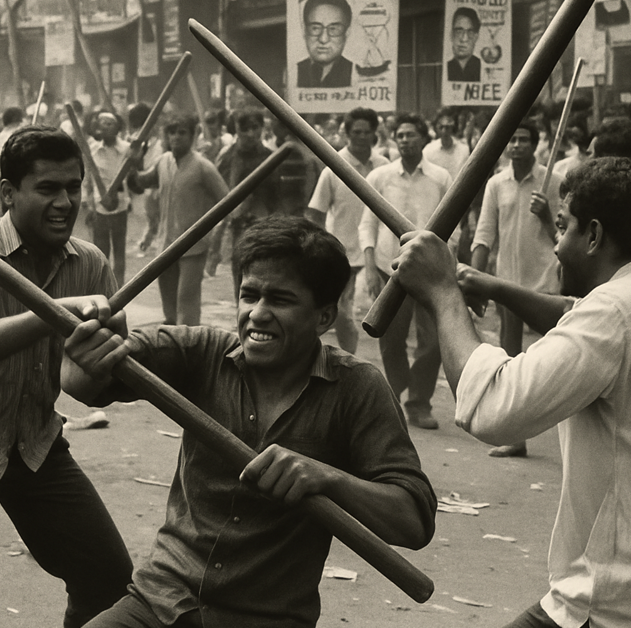
Electoral violence is a pressing issue in Bangladesh. It disrupts the democratic process and instills fear among voters.
The history of elections in Bangladesh is marred by violence. This violence often stems from deep-rooted political rivalries.
Political parties play a significant role in this violence. Their actions can either fuel or mitigate tensions during elections.
Socio-economic factors also contribute to electoral violence. Poverty and unemployment can exacerbate tensions and lead to unrest.
The impact of electoral violence is far-reaching. It affects voter turnout and undermines trust in democratic institutions.
Media coverage can influence public perception of electoral violence. It can either highlight the issues or downplay them.
Understanding the causes of electoral violence is crucial. It helps in formulating effective strategies to prevent future incidents.
This article explores the dynamics of electoral violence in Bangladesh. It aims to provide insights and potential solutions for peaceful elections.
বাংলাদেশের নির্বাচনী সহিংসতার ইতিহাস ও প্রেক্ষাপট
Electoral violence has been a persistent issue in Bangladesh’s political landscape. Over the years, several elections have witnessed violence and unrest.
The root of this violence lies in the country’s tumultuous history. Bangladesh’s political journey has been marked by power struggles and rivalries.
Post-independence, elections often became a battleground for conflicting ideologies. Political parties regularly clashed to assert dominance and control.
Historically, notable incidents have marred various elections. These incidents not only disrupted the political process but also heightened public fear.
For instance, in many past elections, violent clashes between party supporters were reported. Such incidents tarnish the democratic image of the nation.
Several factors contribute to electoral violence in Bangladesh. The absence of trust among political parties is a significant contributor.
Moreover, socio-economic disparities exacerbate tensions during elections. Unemployment and poverty create a fertile ground for violence.
Here’s a brief list of notable electoral violence incidents in Bangladesh:
- 1973: First parliamentary elections saw voter manipulation.
- 1996: Widespread clashes and a lack of free voter access.
- 2014: Significant violence amid boycotts by opposition parties.
These incidents reflect deeper issues within the political system. Recurrent violence shows a need for systemic reform and stronger institutions.
Understanding this background helps us to analyze current challenges. It can guide efforts to create a more peaceful electoral environment.
Addressing these challenges requires a multifaceted approach. Stakeholders must collaborate to ensure violence-free elections.
By reflecting on historical lessons, Bangladesh can pave the way for political stability. Transparent and fair elections are the foundation of democracy.
Ultimately, the history of electoral violence is both a cautionary tale and an opportunity. It teaches the importance of reform for future prosperity.
নির্বাচনে সহিংসতার প্রধান কারণসমূহ
Electoral violence in Bangladesh has multiple roots, each intertwining with the political fabric. Understanding these causes is vital to framing effective solutions.
A primary cause is political polarization. Political parties often view elections as a zero-sum game. This attitude breeds hostility and competition.
The lack of democratic culture within political parties also drives violence. Authoritarian tendencies among leaders suppress dissent and fuel internal conflicts.
Social-economic inequalities further aggravate the situation. Marginalized communities often become pawns in political struggles, easily manipulated by power-seeking entities.
Unemployment amongst youth is a crucial factor. Desperation for economic opportunities can make young people susceptible to involvement in electoral violence.
Additionally, the inadequate enforcement of law and order plays a significant role. Law enforcement agencies often lack the capacity to maintain peace during elections.
Corruption within electoral institutions also contributes to tensions. The lack of transparent processes undermines public confidence and provokes unrest.
Here’s a brief list of prominent causes of electoral violence in Bangladesh:
- Political Polarization: Deep divisions increase electoral tensions.
- Lack of Democracy: Internal party conflicts spill over publicly.
- Economic Inequality: Disparities fuel discontent and unrest.
- Youth Unemployment: Economic desperation leads to manipulation.
- Weak Law Enforcement: Failing to prevent election-related chaos.
- Corruption: Undermines public trust, catalyzing violence.
Moreover, historical grievances fuel current disputes. Past injustices often resurface during elections, exacerbating tensions.
Media portrayal of elections can also inflame violence. Biased reporting often incites emotions and distorts public perception.
Lastly, the absence of comprehensive conflict resolution frameworks is apparent. Without effective mediation, disagreements often escalate into violence.
In conclusion, the causes of electoral violence in Bangladesh are deeply embedded. Addressing these requires cohesive strategies and genuine political will. Recognizing these root causes can guide the journey toward peaceful and democratic elections in Bangladesh.
রাজনৈতিক দল ও নেতাদের ভূমিকা
Political parties and their leaders play a pivotal role in shaping electoral dynamics. Their decisions greatly influence the prevalence of violence in elections.
Leadership strategies often prioritize winning at any cost. This can result in endorsing aggressive tactics that incite violence among supporters.
Political rhetoric is another tool influencing electoral atmosphere. Leaders’ speeches can instill either peace or conflict, depending on their choice of words.
The lack of internal democracy within parties exacerbates tensions. Leaders may suppress dissent, leading to factional violence and external confrontations.
Election candidates sometimes resort to hiring muscle power. This practice fosters a climate of fear, making peaceful elections difficult to achieve.
To highlight their involvement, here are some roles of parties and leaders:
- Rhetoric: Influences supporters’ behavior, often escalating tension.
- Leadership Choices: Encourages hostile or peaceful practices.
- Lack of Democracy: Causes internal and external conflicts.
- Muscle Power: Hiring thugs destabilizes electoral processes.
Leaders often fail to address grievances within their own ranks. This neglect allows unresolved issues to manifest as electoral violence.
Furthermore, collaboration among parties tends to be lacking. An unwillingness to negotiate promotes hostility, heightening the risk of violent confrontations.
Ultimately, the role of political parties and leaders is crucial in curbing electoral violence. By fostering dialogue and transparency, they can encourage peaceful political engagement. Emphasizing democratic values and ethical conduct within party ranks will pave the way for more peaceful elections in Bangladesh.
আইনশৃঙ্খলা বাহিনী ও নিরাপত্তা ব্যবস্থার কার্যকারিতা
The effectiveness of law enforcement in Bangladesh’s elections cannot be overstated. Their role in maintaining peace is critical during this volatile period.
Security forces are deployed to ensure order at polling stations. Their presence is intended to deter potential acts of violence and intimidation.
However, the reality on the ground often differs. Instances of inadequate response from security personnel have been reported, undermining the safety of voters.
One significant issue is the alleged partiality of some officers. Accusations of bias toward certain political factions contribute to distrust among the electorate.
Poor training and lack of resources further complicate their effectiveness. Understaffed and under-equipped forces face challenges in handling large, agitated crowds.
The effectiveness of these forces can be evaluated by several factors:
- Deployment Coverage: Ensuring presence in remote and high-risk areas.
- Training Level: Ability to manage crises without escalating violence.
- Resource Availability: Access to necessary tools and technology.
- Impartiality: Equitable enforcement of law regardless of political pressures.
For lasting peace, strategic reforms in training and resource allocation are essential. Enhancing transparency in law enforcement can restore public trust.
Moreover, fostering cooperation between law enforcement agencies and community leaders can bridge existing gaps. Ensuring accountability and impartiality will be crucial.
In the end, a robust security framework is vital for safeguarding democratic processes. By addressing current inadequacies, Bangladesh can work towards more secure and peaceful elections.
নির্বাচনী সহিংসতার সামাজিক ও অর্থনৈতিক প্রভাব
Electoral violence has far-reaching social implications in Bangladesh. Communities experience increased tension and discord during elections.
Families often feel the aftermath of such violence long after polling ends. The atmosphere of fear can linger, influencing societal behaviors and norms.
Social cohesion suffers greatly during these times. As rival political factions clash, divisions within communities deepen.
This violence disrupts daily life. Schools and businesses close due to security concerns, affecting education and livelihoods alike.
Economically, electoral violence imposes significant costs on the nation. Damaged infrastructure and disrupted trade hinder growth and development.
Voter turnout often decreases in areas prone to violence. The fear of intimidation keeps many from exercising their democratic rights, impacting representation.
Long-term economic repercussions also include decreased foreign investment. Investors remain wary of instability, hindering potential economic progress.
Here’s how electoral violence affects various aspects:
- Community Relations: Increased mistrust and division.
- Public Safety: Heightened fear and insecurity.
- Economic Activity: Stalled business operations and trade.
- Education and Health: Disruptions in services.
- Investment: Deterred domestic and international investments.
The psychological impact on citizens, particularly children, cannot be overlooked. Witnessing violence erodes their sense of security and well-being.
Moreover, minority groups often bear a disproportionate burden of electoral violence. Their marginalization can worsen, reducing their ability to participate in political processes.
Addressing these impacts requires holistic solutions. Community engagement and dialogue can help mend social rifts and promote understanding.
Finally, fostering an inclusive environment, where all voices are heard, can prevent violence. Economic incentives that emphasize stability may encourage more peaceful elections.
Through comprehensive strategies, Bangladesh can address both social and economic ramifications of electoral violence, paving the way for harmonious societal progress.
গণমাধ্যম ও সামাজিক যোগাযোগ মাধ্যমের ভূমিকা
Media plays a pivotal role in shaping public perceptions during elections. Traditional and digital platforms become key sources of information.
Coverage of electoral violence can heighten awareness. However, it can also contribute to panic if not handled responsibly.
Responsible journalism is crucial in these times. Media must strive to provide balanced reports, avoiding sensationalism.
Social media’s influence has grown significantly. Platforms like Facebook and Twitter facilitate rapid information exchange.
However, they also serve as avenues for misinformation. False reports can spread quickly, intensifying tensions and misunderstandings.
Key aspects of media’s role include:
- Information Dissemination: Timely reporting on events.
- Awareness Building: Highlighting electoral issues.
- Fact-Checking: Curbing spread of fake news.
- Debate Facilitation: Encouraging public discourse.
- Advocacy: Promoting peace and harmony.
Social media encourages civic engagement. Users discuss electoral issues and mobilize for peaceful participation.
Nonetheless, moderation and guidelines are necessary. Platforms should enforce rules to prevent misuse and foster constructive dialogue.
Media, both traditional and social, holds significant power. Utilizing this responsibly can contribute to peaceful elections.
By promoting accurate information and encouraging dialogue, media can help mitigate electoral violence and its adverse effects.
আন্তর্জাতিক দৃষ্টিভঙ্গি ও তুলনামূলক বিশ্লেষণ
The issue of electoral violence is not unique to Bangladesh. Many countries face similar challenges during elections. Comparing Bangladesh’s situation with that of other nations can provide insightful perspectives.
International observers often express concern about electoral violence in Bangladesh. Their reports highlight the systemic issues that need urgent attention. Comparisons with other countries reveal varied strategies in handling such violence.
Some nations have successfully reduced electoral violence through reforms. These may include strengthening democratic institutions and ensuring transparency. Learning from these examples can be beneficial for Bangladesh.
A few key international examples include:
- South Africa: Implemented comprehensive electoral reforms and public education.
- Kenya: Enhanced legal frameworks and election monitoring systems.
- India: Adopted multi-phase elections to manage security and logistics.
International cooperation and dialogue are crucial. Organizations like the United Nations play a role in advising and monitoring elections. Sharing best practices can drive positive changes.
By evaluating these international models, Bangladesh can develop more effective strategies. Adapting successful techniques from others could mitigate electoral violence. Global collaboration remains vital to fostering peaceful electoral environments worldwide.
নির্বাচনী সহিংসতা প্রতিরোধে আইনি কাঠামো ও সংস্কার
To combat electoral violence, robust legal frameworks are necessary. Bangladesh’s legal system provides some provisions, but gaps remain. Effective enforcement of existing laws is often a challenge.
Election-related violence requires specific legal interventions. Current laws need updates to address modern-day complexities. Ensuring their efficient implementation is crucial for preventing violence.
Legal reforms should focus on the following areas:
- Stronger Penalties: Enhance punishments for election-related crimes.
- Comprehensive Definitions: Clearly define what constitutes electoral violence.
- Improved Monitoring: Establish mechanisms for real-time election monitoring.
Ensuring transparency in the election process can deter violence. Legal provisions should mandate full disclosure of campaign financing. This transparency can help identify potential sources of conflict.
Another essential reform is the protection of electoral stakeholders. Laws must ensure the safety of candidates, election officials, and voters. Special measures should protect vulnerable groups during elections.
In addition to legal measures, political will is necessary. Policymakers must be committed to enforcing and updating election laws. Only then can Bangladesh hope to eliminate electoral violence effectively.
Efforts should also involve educating the public about election laws. Public awareness campaigns can emphasize the importance of peaceful elections. Ultimately, collaborative action is required to bring meaningful change.
নাগরিক সমাজ, এনজিও ও শিক্ষার ভূমিকা
Citizen engagement is vital to curbing electoral violence. Civil society can play a pivotal role in promoting peaceful elections. They can serve as watchdogs, ensuring transparency and fairness.
Non-governmental organizations (NGOs) can bridge gaps between communities and policymakers. They can advocate for policy changes, reflecting grassroots needs. Additionally, NGOs can facilitate dialogue among conflicting parties.
Education is a powerful tool against electoral violence. Schools and universities should incorporate peace education in their curriculum. This can instill the values of democracy and non-violence in youth.
Some effective strategies include:
- Community Workshops: Conduct workshops to raise awareness about peaceful elections.
- Youth Programs: Engage young people in democracy-building activities.
- Public Campaigns: Launch campaigns highlighting the importance of violence-free elections.
Religious and community leaders also have roles to play. They can leverage their influence to advocate for non-violent practices. Through guidance, they can promote a culture of peace during elections.
Collaborations among civil society, NGOs, and educational institutions are crucial. These partnerships can help build a strong framework for peaceful elections. Together, they can create a resilient system that withstands the pressures of electoral contests.
প্রযুক্তি ও উদ্ভাবনী সমাধান
Technology can significantly aid in reducing electoral violence. Innovative solutions offer monitoring and prevention tools. They can ensure transparency and accountability during elections.
Digital platforms can enhance voter education and awareness. Information about voting processes and rights can be disseminated quickly. This ensures informed and engaged citizens.
Election monitoring apps are an effective tool. They allow voters to report incidents in real-time. Authorities can respond swiftly to any irregularities reported.
Electronic voting systems can also play a role. They minimize human error and tampering possibilities. Such systems can lead to increased trust in the electoral process.
Some technological strategies include:
- Surveillance Drones: Use to oversee and secure polling stations.
- SMS Alerts: Send safety updates and notifications to voters.
- Data Analytics: Analyze trends to predict and prevent violence.
Social media platforms also contribute to election integrity. They help spread messages of peace and non-violence. Moreover, they provide a space for public discourse and dialogue.
Implementing these innovations can foster fairer elections. They can transform the landscape of electoral processes in Bangladesh. Technology, when used effectively, can pave the way for peaceful democratic practices.
ভবিষ্যৎ করণীয়: নীতিমালা ও সুপারিশ
Addressing electoral violence in Bangladesh requires strategic actions. Clear policies and practical interventions are essential. These measures need the involvement of various stakeholders.
A multi-faceted approach is recommended. This involves both political and civil sectors. Politicians must commit to peaceful elections through dialogue.
Regulatory frameworks should be strengthened. Laws need to comprehensively address electoral violence. Legal penalties must deter individuals from violent acts.
Awareness campaigns play a crucial role. They can educate the public on the importance of non-violence. Community involvement is key to spreading these messages.
Some recommendations for policy improvements include:
- Legal Reforms: Update and enforce laws to curb violence.
- Training Programs: Equip law enforcement with skills to manage conflicts.
- Community Engagement: Foster dialogues between local leaders and the public.
International cooperation can also be beneficial. Learning from global best practices may provide insight. Countries with successful election conduct can offer valuable lessons.
The role of youth should not be underestimated. Engaging young people in political processes can promote peace. Their energy and idealism can drive change.
In conclusion, an inclusive approach is essential. By addressing root causes and promoting reforms, sustainable peace can be achieved. Bangladesh can then pave the way for democratic excellence.
উপসংহার: শান্তিপূর্ণ নির্বাচনের পথে বাংলাদেশ
Bangladesh stands at a critical juncture. The challenges of electoral violence need immediate attention. Achieving peaceful elections remains a national priority.
Understanding the complexities of violence is crucial. It paves the way for effective solutions. Addressing the root causes ensures long-term peace and stability.
Collaboration among stakeholders is essential. Political leaders, law enforcement, and citizens must work together. Such unity fosters a culture of peace.
The commitment to reform and education is paramount. Policies should be dynamic and forward-thinking. Investing in education can build informed future voters.
Bangladesh’s journey towards peaceful elections requires perseverance. Continued efforts and collective will are vital. Through unity, Bangladesh can set an example of democratic integrity.
Writer: M M Rahman