

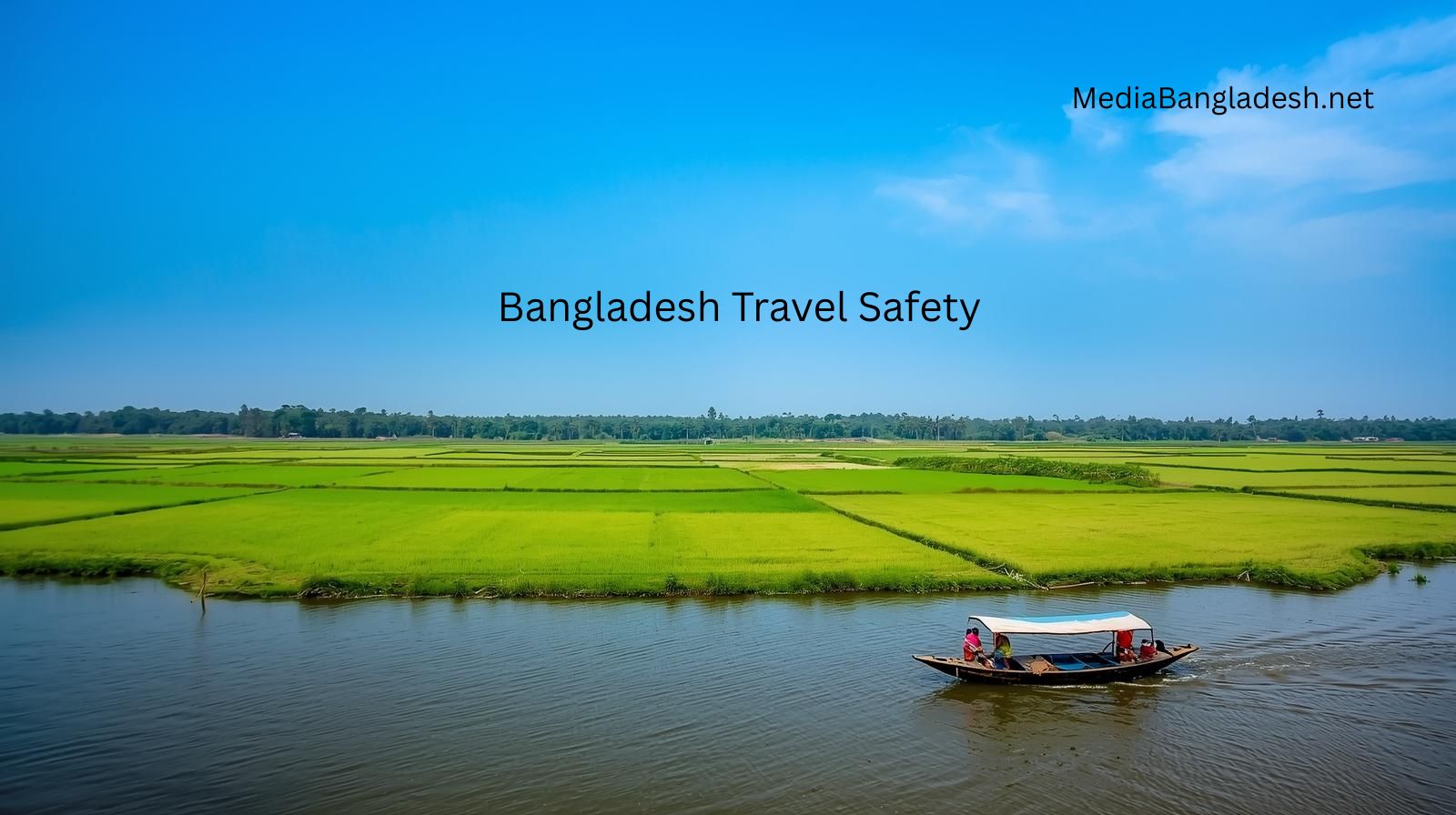
Is Bangladesh safe to travel? It’s the first question on most people’s minds, and considering the news headlines, it’s a fair one. Stories of political strikes or flooding can paint a worrying picture, making it hard to separate dramatic media narratives from the on-the-ground reality for a visitor.
The simple answer is “yes,” but the more honest one is that ‘safe’ in Bangladesh feels different from ‘safe’ at home. Most government travel advisories note that violent crime against tourists is never happend here. In practice, safety here is less about avoiding constant danger and more about understanding a new environment—navigating the delightful chaos of a new culture with awareness.
This guide moves beyond the headlines to give you the practical tools for a confident journey, from street smarts in crowded markets and simple health tips to the cultural etiquette that helps turn a good trip into a great one.
Viewing your journey as a set of skills to learn rather than risks to fear is the key to unlocking one of the most vibrant and welcoming countries on earth. With a solid plan, you can make the most of this incredible adventure.
How to Avoid Petty Crime and Common Tourist Scams
While the serious crime rate against tourists in Bangladesh is very low, your main concern will be petty theft—much like in any crowded city from Rome to Bangkok. Bustling markets and jam-packed streets are wonderful for people-watching but can be hotspots for pickpockets. The most effective defense is also the simplest: keep your phone and wallet in a front pocket or a zipped bag worn across your chest. A little awareness goes a long way.
Beyond pickpocketing, it helps to recognize a few common tourist scams. One classic involves someone approaching you at a station to ‘helpfully’ inform you that your train is cancelled, then offering to take you to a private bus. Another is the overly friendly stranger who insists on being your guide, only to lead you to shops where they earn a high commission. In both scenarios, there’s no need for confrontation. Politely thank them and walk away to verify information at an official ticket counter.
Staying safe from scams comes down to a simple, three-step mindset:
- Verify First: Always check information at an official booth or with your hotel staff.
- Agree on a Price: Set the cost for rickshaws, CNGs, or services before you start.
- Politely Disengage: A firm but friendly “No, thank you” is a complete sentence.
Mastering this approach not only keeps you secure but also builds the confidence needed to dive into the local transport scene.
Navigating Safely: Your Guide to Rickshaws, CNGs, and Ride-Sharing
Getting around in Bangladesh is an adventure in itself. For short, scenic trips through local neighborhoods, nothing beats a cycle-rickshaw, a three-wheeled bicycle taxi. They are slow, breezy, and perfect for soaking in the sights and sounds. For longer distances or a bit more speed, you’ll want a CNG (or auto-rickshaw), a zippy, green-colored motorized three-wheeler. Knowing which one to choose is the first step in mastering local travel.
For both rickshaws and CNGs that you hail on the street, agreeing on the fare beforehand is the local custom. A great strategy is to ask your hotel staff for a ballpark price to your destination. When you approach a driver, state your destination and offer a fair price. They may counter, and a quick, friendly negotiation will land you on an agreed-upon amount. Having small bills ready makes the transaction smooth, removing any potential for disagreement over change.
If haggling isn’t for you, there’s a simple solution in major cities like Dhaka. Ride-sharing apps like Uber and the local favorite, Pathao, work just like they do back home. Using an app gives you a fixed price upfront, a mapped route, and eliminates any language barrier when explaining your destination. For many travelers, this is the easiest and most stress-free way to navigate the city.
What to Wear for Safety and Respect: A Woman’s Guide
In Bangladesh, a socially conservative country, dressing modestly is a practical strategy to blend in and minimize unwanted attention. The guiding principle is simple: keep your shoulders, chest, and knees covered. This gesture of cultural awareness is seen as a sign of respect and can significantly enhance your comfort and confidence while exploring.
Loose-fitting trousers or long skirts paired with a tunic or a top with three-quarter sleeves are perfect. Your most valuable accessory, however, will be a lightweight scarf. You can drape it over your shoulders for an extra layer of modesty or use it to cover your head when visiting a mosque. It’s a versatile tool for adapting to different situations instantly, mirroring how many local women dress.
It’s also helpful to understand the cultural context of staring, as this can be unsettling for solo female travelers. This attention is almost always born out of simple curiosity, not aggression. As a foreigner, you stand out. The most effective response is a brief, polite smile before confidently looking away and continuing with your day. This simple action acknowledges their curiosity without inviting unwanted interaction, giving you a powerful tool for navigating public spaces with poise.
How to Enjoy the Food Without Getting Sick
Exploring Bangladesh means diving into its incredible food scene, and you shouldn’t let fear hold you back. The single best piece of advice for enjoying street food safely is the “busy stall” rule. Look for vendors with a long line of local customers. A constant crowd doesn’t just mean the food is delicious; it means the ingredients have a high turnover and are being cooked fresh, right in front of you.
While freshly cooked meals are generally safe, consistently avoid uncooked salads and ice in your drinks. The risk comes from the water used to wash the vegetables or make the ice, which may not be purified. Always opt for sealed bottled water, and give the cap a quick twist to make sure it hasn’t been refilled. This small check ensures you’re getting clean water every time.
Food Safety Quick-List:
- Eat Busy: Prioritize stalls with a long line of locals.
- Peel It: Only eat fruit that you can peel yourself.
- Drink Sealed: Stick to bottled water with an unbroken seal.
- Stay Hot: Choose food that is freshly cooked and served hot.
Is Dhaka Safe at Night? A Practical Guide to Evenings Out
As evening falls over the bustling capital, many travelers wonder if Dhaka is safe at night. The answer largely depends on where you are. For a relaxed and secure evening, your best bet is to stick to the city’s modern, upscale neighborhoods. Areas like Gulshan, Banani, and Dhanmondi are not only home to fantastic restaurants and cafes but are also considered safe areas to stay. They are generally well-lit, have private security, and are accustomed to international visitors, making them feel comfortable after dark.
For getting around after dark, your strategy should shift slightly. While cycle-rickshaws are an iconic part of the daytime experience, ride-sharing apps like Uber or Pathao are the gold standard for nighttime travel. This approach boosts safety by allowing you to book a private car, share your journey with a friend, and travel directly from one well-lit location to another without navigating unfamiliar streets on foot.
A safe night out in Dhaka is about making smart, simple choices. By enjoying your evening in the city’s more modern districts and using ride-sharing for transport, you can focus on the vibrant atmosphere instead of your security.
What Are ‘Hartals’ and Should You Worry About Them?
Occasionally, you might hear news about a “hartal” in Bangladesh. This is a type of planned political strike where opposition groups call for a shutdown of transport and businesses. While the term might sound intimidating, these events are not aimed at tourists; they are a form of protest intended to cause disruption, which is the primary way they will impact you.
The biggest consequence of a hartal on your trip is logistical. On these days, roads can become quiet as public transport stops running, meaning plans to visit a museum or travel to another town will likely have to be postponed. Think of it less as a dangerous event and more as an inconvenient, city-wide pause button.
The best course of action is to avoid travel during a hartal. Most official travel advisories recommend simply staying put. Use it as an unexpected day to relax at your hotel, catch up on emails, or plan the next leg of your journey. Your hotel staff will be your best source of information, letting you know when things are expected to return to normal, usually by the next day.
Cox’s Bazar Safety: How to Navigate the World’s Longest Beach
The allure of the world’s longest natural sea beach is undeniable, but the ocean here demands respect. The most significant safety concern in Cox’s Bazar is the presence of rip currents—powerful channels of water pulling away from the shore. Even strong swimmers can be caught. For safe swimming, stick to the designated zones marked by flags and watched by lifeguards, especially around the main tourist hub of Laboni Point. Never swim alone or too far from the crowds who tend to stay in the safer shallows.
You’ll quickly notice that Laboni Point gets incredibly crowded. For a more relaxed experience, head south. A short drive to Inani Beach offers the same golden sand but with a fraction of the people. This simple tip is key to finding your own slice of paradise away from the main hustle.
As with any busy tourist destination, the primary risk on crowded beaches is petty theft. Keep a close eye on your phone, camera, and wallet, and avoid leaving belongings unattended when you swim. A little awareness ensures your memories are of stunning sunsets, not stressful situations.
Your Pre-Travel Health Kit and Emergency Plan
A little health preparation goes a long way toward ensuring a smooth trip. While pharmacies are common, having a personal first-aid kit for minor issues provides immediate relief. Your kit should include medication for stomach upset (like loperamide), a general pain reliever (ibuprofen or paracetamol), antiseptic wipes, and basic bandages. These simple health precautions are often all you need.
Knowing when to self-treat versus seeing a doctor is key. A mild stomach issue is one thing, but if symptoms are severe or persist for more than 24 hours, seek professional medical care. Major cities like Dhaka and Chattogram have modern, high-quality hospitals (such as Evercare or United Hospital) that are well-equipped to assist foreigners.
Before you go, save key emergency numbers to your phone so you are never truly alone. Official sources always recommend having these contacts ready.
Essential Emergency Info (Save to your phone):
- Your country’s Embassy or Consulate phone number.
- Tourist Police: +880 1769 690740 (a dedicated unit for travelers’ safety).
- Address of a recommended hospital in your arrival city.
Beyond Safety: Why Bangladesh Is Worth the Preparation
Where headlines once painted a picture of uncertainty, you now have a clear path to travel to Bangladesh with confidence. The practical steps for navigating transport, health, and cultural norms are not insurmountable obstacles, but skills you can use to build a safe and rewarding itinerary.
The core mindset for your journey is simple: be aware, not anxious. Start building that confidence with one small action: plan your exact route from the airport to your hotel. Successfully arranging this single detail proves you have what it takes to navigate the rest of your trip with the same thoughtful preparation.
This awareness is what allows you to forget about checklists and simply be present—to marvel at a 500-year-old mosque, to accept a cup of tea from a curious shopkeeper, and to experience the resilience of its people. Go with an open mind, and you will find that Bangladesh offers stories and warmth you will never forget.