
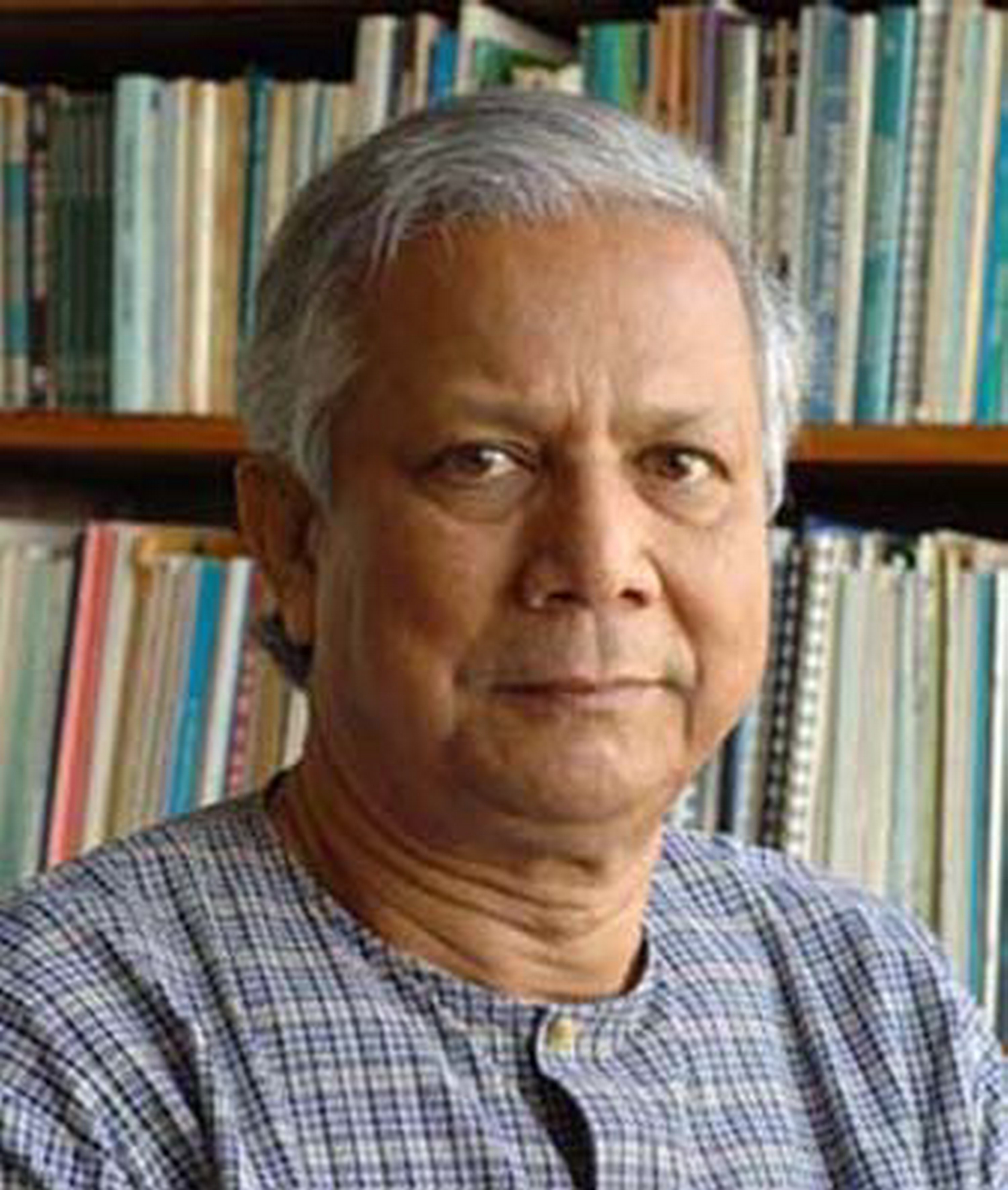
Professor Dr. Muhammad Yunus was born on June 28, 1940, in the village of Bathua, located in the Chittagong District of East Bengal, which is now Bangladesh. He was the third of nine children in a middle-class family. His father, Hazi Dula Mia Shoudagar, was a successful jeweler, and his mother, Sufia Khatun, was a homemaker who instilled in her children the values of empathy and helping others.
Muhammad Yunus
Date of Birth: 28 June, 1940 (the 3rd of 9 brothers and sisters)
Place of Birth: Village bathua, Hathazari in Chittagong, Bangladesh
Father’s Name: Hazi Dula Mia Shoudagar
Mather’s Name: Sufia Khatun
Profession: Economist, Professor of Economics, Chittagong University, Bangladesh, From 1969 to 1972, unus was an economics professor at Middle Tennessee State University in Nashville, Tennessee, USA.
Founder: Grameen Bank
Award: Dr Yunus Nobel Peace Prize 2006 Winner and received other more than 60 national and international awards.
Honor: Peace Prize Winner Dr. Muhammad Yunus honored Chancellor of Glasgow Caledonian University in Scotland in 2012
Adviser: He is a Member of Advisory Board of the Shahjalal University of Science and Technology
Books: He wrote books, Banker to the Poor and other 2 books on Social Business
Politics: In 2007 Professor Yunus interested in a political part in Bangladesh and named “Nagorik Shakti” but later discarded.
Member: Member of the Executive Board of the United Nations Foundation
Top position : Professor Yunus selected “25 most influential business people in the last 25 years” by Wharton School of Business PBS documentary in 2006 and included World’s top 100 “60 Years of Asian Heroes” by Times Magazine in 2008.
Education: Peace Prize Winner Yunus passed the Entrance Examination from Chittagong Collegiate School securing the 16th Position among the 39,000 students in East Pakistan. He was an active Boy Scout and traveled west Pakistan and India in 1952, and in 1955 to participate in Canada Jamborees.
He was a student of the University of Chittagong, he became active in cultural activities and won awards for the action film. He enrolled at the Faculty of Economics of Dhaka University in 1957 and received his Bachelor of Arts (BA) in 1960 and Master of Arts (MA) in 1961.
In 1965, Dr. Yunus was offered a Fulbright scholarship to study in the United States. Yunus completed Ph.D. in economics from Vanderbilt University in the United States by the State graduate program in development (GPED) in 1971.
Liberation war: In 1971, during the liberation war of Bangladesh, Professor Yunus founded a citizen’s committee and ran the Bangladesh Information Center, Bangladesh with life in the United States to obtain support for the liberation.
Grameen Bank: Professor Yunus started process of Grameen Bank in 1976 at University of Chittagong as he launched a research project to know how to design a credit delivery system to provide banking services to the rural poor of Bangladesh. As he got positive result, in October 1983 the Grameen Bank was authorized by national legislation as an independent bank.
Nobel Peace Prize Winner Bangladeshi
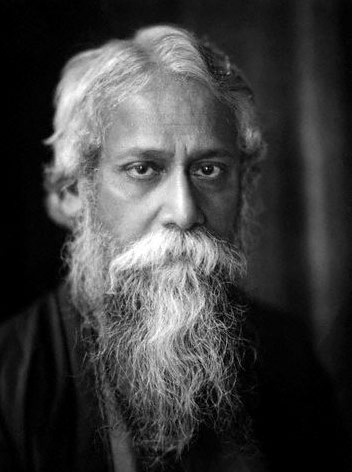
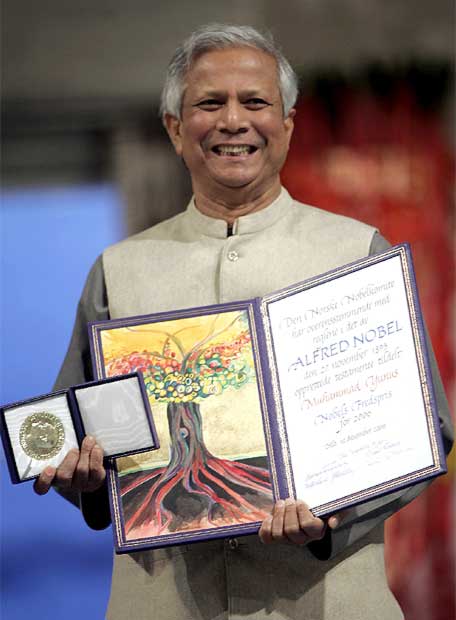
 Beyond independence in 1971 and restoration of democracy in 1991, Bangladesh witnessed the biggest achievement as Professor Yunus and his founded Grameen Bank were announced the Nobel Peace Prize 2006 on October 13, 2006 for pioneering the use of micro-credit to benefit poor entrepreneurs. Dr. Md. Yunus is the only Bangladeshi and the 3rd Bangalee after poet Rabindranath Tagore and economist Amartya Sen to win the Nobel Prize. On the other hand Grameen Bank which was founded by Professor Yunus has been instrumental by offering loans to millions of poor Bangladeshis, mostly women, without any financial help, in improving their standard daily life by starting a small businesses with the small borrowed amount. Grameen Bank has given more than $5.1 billion US dollar to 5300000 borrowers. To ensure repayment, the bank uses a system of “solidarity groups”. A group of few people apply together for loans & its members act as
  co-guarantors of repayment and support each other efforts at economic self-advancement. As it has grown, the Bank has also developed different systems of credit that helpful for the poor. In addition to microcredit, grameen bank offers education & housing loans as well as loan for fisheries and irrigation projects, venture capital, textiles, and other small capital investment activities, along with other banking services such as savings.
“Lasting peace cannot be achieved unless large population groups find ways in which to break out of poverty. Microcredit is one such means,” said Ole Danbolt Mjos, Chairman of the Norwegian Nobel Committee. ” Dr. Yunus has shown himself to be a leader who has managed to translate visions into practical action for the benefit of millions of people in Bangladesh and other countries of the world.”
Professor Yunus and Grameen Bank were chosen for the prestigious award from among 191 candidates, including 168 individuals and 23 organisations.
 Dr. Yunus, dubbed “Banker to the Poor”, began fighting against poverty during a famine in the year 1974 in Bangladesh with a loan of $27 out of his pocket to help 42 women buy weaving tools to save them from the clutches of the moneylenders. “The Poor people got the weaving tools quickly, they started to weave quickly and they repaid him quickly,” said Mjos.
“Yunus and Grameen Bank have shown that even the poorest of the poor can work to bring about their own development,” the Nobel Committee said in its citation.
In his instant reaction, the pioneer of the micro-credit concept said, “This is fantastic news for all of us-for Grameen Bank, Bangladesh, and all the poor countries and all the poor people around the world.”
Recipient of numerous national and international awards, Dr. Yunus termed the Nobel achievement “the sky”, but said it also “burdened us with further responsibility. Bangladesh now must remove poverty from the country and also put in more efforts to eradicate poverty from the world.”practice.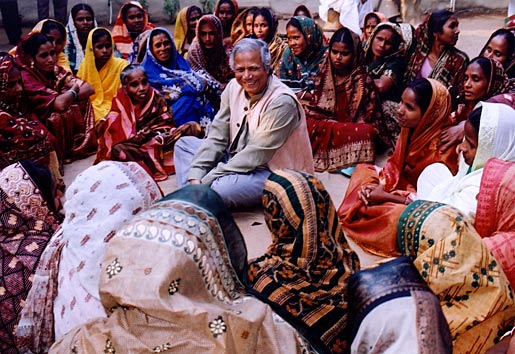
“This is an honour for the country, for the nation…This kind of incident does not happen often to a nation,” Nobel Peace Prize Winner Professor Yunus said, thanking the Almighty.
“We [Bangladeshis] have taken many things from the world, now we (Bangladesh people) have given something to the world. We have placed a model before the world,” Yunus added.
“Now I dream of Bangladesh as the first country to be freed from hunger,” Professor Yunus said.
Asked if the prize is appropriate for peace, Nobel Peace Prize Winner Dr Yunus said, “I was not astonished to get the Nobel Prize for peace because economics and peace are interrelated-economics influences people’s life.
“Hunger is one of the main reasons of anarchy. If it is prossible to reduce poverty from the society, peace will come on earth,” Nobel Peace Prize Winner Yunus added.
Nobel Peace Prize Winner Dr Yunus said, “I will not spend the prize money for myself… I will rather spend it in social business on a no-profit no-loss policy. Grameen Bank will also establish an eye hospital where even beggars will be given treatment at the cost of Tk 10- Tk. 20.
“We will make yogurt with all kinds of nutritious elements. We want to provide nutrition to the poor and children,” Professor Muhammad Yunus said figuratively.
In the field of development idea, Nobel Peace Prize for Professor Muhammad Yunus was long overdue and it is in recognition that the country has something to offer to the world, top economists, researchers and business leaders observed.
Dr. Md. Yunus, the visionary and developer of the unique microcredit concept, was born at a poor village in Chittagong in June 28, 1940.
The Grameen Bank, which He founded and shared the Nobel Peace Prize 2006 with, now has 2211 branches covering more than 70370 villages and 6.5 million people. 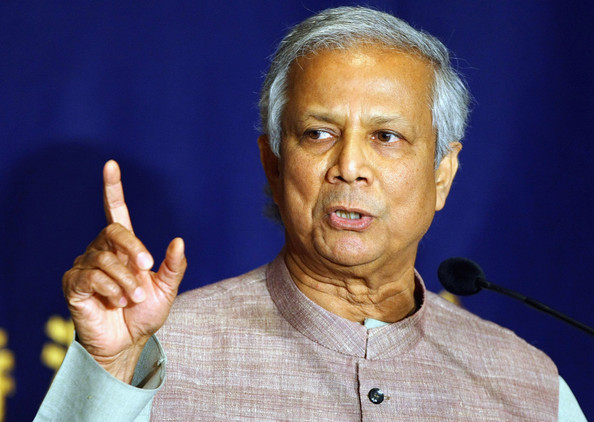
Nobel Peace Prize Winner Professor Yunus is now living a happy life in Bangladesh with his wife Mrs Afrozi and daughter Deena.
Coming of a well-off family, He was able to attend preparatory school in Chittagong. After that, Yunus studied in Chittagong Collegiate School and Chittagong College. He completed his Bachelor of Arts (BA) and Master of Arts (MA) from Dhaka University, Bangladesh
Nobel Peace Prize Winner Dr. Md. Yunus has received his Phd in Economics from Vanderbilt University in 1969 after getting Fulbright scholarship. Yunus did some teaching in Colorado University too.
After the end of his seven-year stay in US, He supported the Bangladesh’s freedom struggle. Returning to Bangladesh and observing the poverty of rural people in the clutches of exploitative moneylenders, Dr. Yunus came up with the idea of microcredit.
After staying seven years in Bangladesh, he joined Chittagong University as a professor of economics.
Professor Yunus first involved himself in fighting poverty during the 1974 famine in Bangladesh. Yunus discovered that very small loans could make a significant difference to a poor person’s ability to survive with a family. 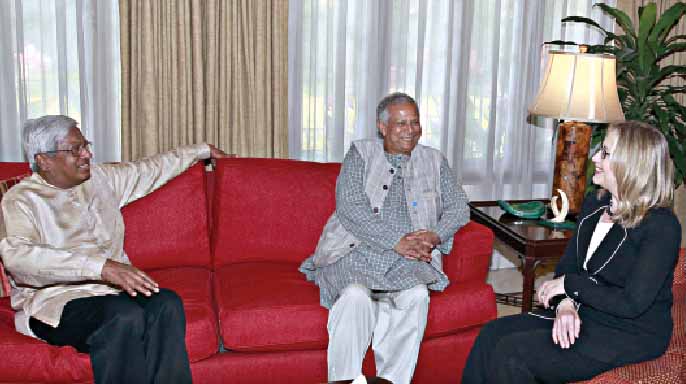
The first loan he gave was of $27 from his own earning. He lent it to about 42 female basket weavers in the village of Jobra near Chittagong University. Dr. He discovered that they could repay the amount very quickly by selling their goods in the market.
Before this, they used to take loans from village loan-sharks with high interest rates. In some cases, the interest rates stood at a staggering 10 per cent a week. 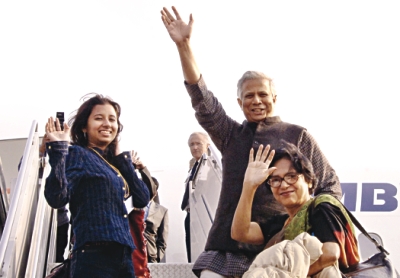
As a strong financial stitution banks were not interested in giving tiny loans to poor people and they considered the poor to be bad borrowers.
In 1976, He launched the activities of Grameen Bank and started giving loans to poor Bangladeshis against the advice of banks and the government. He carried on giving out micro-loans and in 1983, he officially formed the Grameen Bank, meaning Village Bank, on the principles of trust and solidarity.
The Grameen Bank’s method of giving out loans is now used in projects in 58 countries, including the US, Canada, France, the Netherlands and Norway.
In 1997, Nobel Peace Prize Winner led the world’s first microcredit summit in Washington, DC.
Dr Yunus received over 60 different national and international awards before winning the Nobel Peace Prize in 2006.
Awards and Honors
Dr. Md. Yunus, the founder of Grameen Bank and a pioneering figure in the field of microfinance, has received numerous awards and honors throughout his illustrious career. His innovative approach to poverty alleviation and his commitment to social entrepreneurship have earned him global recognition. Here are some of the most notable awards and honors he has received:
Nobel Peace Prize (2006)
The Nobel Peace Prize is one of the most prestigious awards in the world, given annually to individuals or organizations that have made significant contributions to world peace. Yunus, along with the Grameen Bank, was awarded the Nobel Peace Prize in 2006 for their efforts to create economic and social development from below. The Nobel Committee recognized their innovative approach to providing microcredit to the poor, which has empowered millions of people, especially women, to break free from the cycle of poverty.
Presidential Medal of Freedom (2009)
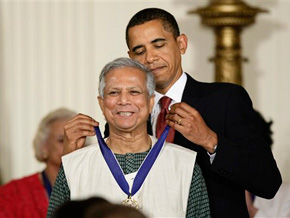
The Presidential Medal of Freedom is the highest civilian award in the United States, recognizing individuals who have made significant contributions to the security or national interests of the United States, world peace, or cultural or other significant public or private endeavors. Dr. Yunus was awarded this honor by President Barack Obama in 2009 for his groundbreaking work in microfinance and his role in promoting economic and social development.
Congressional Gold Medal (2010)
The Congressional Gold Medal is one of the highest civilian awards in the United States, bestowed by the United States Congress. In 2010, Dr. Yunus was awarded the Congressional Gold Medal in recognition of his contributions to the global fight against poverty and his pioneering efforts in microfinance.
World Food Prize (1994)
The World Food Prize is an international award that honors individuals who have advanced human development by improving the quality, quantity, or availability of food in the world. Dr. Yunus received the World Food Prize in 1994 for his efforts to combat hunger and poverty through the innovative use of microcredit.
Seoul Peace Prize (2006)
The Seoul Peace Prize is awarded biennially to individuals or organizations that have made significant contributions to the promotion of world peace. Dr. Md. Yunus was honored with the Seoul Peace Prize in 2006 for his work in microfinance and his efforts to empower the poor, which have contributed to peace and stability.
Ramon Magsaysay Award (1984)
The Ramon Magsaysay Award is often referred to as Asia’s Nobel Prize and is awarded annually to individuals or organizations in Asia who have made outstanding contributions to their societies. Dr. Yunus received the Ramon Magsaysay Award for Community Leadership in 1984 in recognition of his work in developing the concept of microcredit and founding the Grameen Bank.
Indira Gandhi Prize for Peace, Disarmament, and Development (1998)
The Indira Gandhi Prize is an annual award presented by the Indira Gandhi Memorial Trust to individuals or organizations for their contributions to peace, disarmament, and development. Dr. Md. Yunus was honored with this prize in 1998 for his innovative work in microfinance and his efforts to improve the lives of the poor.
Prince of Asturias Award for Concord (1998)
The Prince of Asturias Awards are presented annually in Spain to individuals, entities, or organizations from around the world that make notable achievements in the sciences, humanities, and public affairs. Dr. Yunus received the Prince of Asturias Award for Concord in 1998 for his pioneering work in microfinance and his contributions to social and economic development.
Simon Bolivar Prize (1996)
The Simon Bolivar Prize is awarded by UNESCO to individuals or organizations that have made significant contributions to freedom, independence, and the dignity of peoples and individuals. Dr. Md. Yunus was honored with this prize in 1996 for his efforts to empower the poor through microcredit and promote social and economic development.
The Economist Innovation Award (2005)
The Economist Innovation Award recognizes individuals and organizations that have made significant contributions to innovation in various fields. Dr. Md. Yunus received this award in 2005 for his innovative approach to microfinance and his work in establishing the Grameen Bank.
King Hussein Humanitarian Leadership Prize (2000)
The King Hussein Humanitarian Leadership Prize is awarded to individuals or organizations that have demonstrated exceptional humanitarian leadership. Dr. Yunus was honored with this prize in 2000 for his groundbreaking work in microfinance and his efforts to improve the lives of the poor.
Clinton Global Citizen Award (2006)
The Clinton Global Citizen Award is presented by the Clinton Foundation to individuals who have demonstrated extraordinary leadership in addressing global challenges. Dr. Md. Yunus received this award in 2006 for his pioneering work in microfinance and his contributions to poverty alleviation.
Nobel Peace Prize Lecture (2006)
As a Nobel laureate, Dr. Md. Yunus delivered the Nobel Peace Prize Lecture in 2006, where he shared his vision for a world without poverty and his belief in the power of social business and microfinance to create lasting change.
Distinguished Alumni Award, Vanderbilt University (1996)
Vanderbilt University, where Dr. Yunus completed his Ph.D. in economics, honored him with the Distinguished Alumni Award in 1996 in recognition of his outstanding achievements and contributions to society.
The Franklin D. Roosevelt Freedom Award (2006)
The Franklin D. Roosevelt Freedom Award is presented to individuals who have made significant contributions to the cause of freedom. Dr. Md. Yunus received this award in 2006 for his work in promoting economic freedom through microfinance and social entrepreneurship.
World Technology Award for Social Entrepreneurship (2003)
The World Technology Awards recognize individuals and organizations that have made significant contributions to science and technology. Dr. Yunus received the award for Social Entrepreneurship in 2003 for his pioneering work in microfinance and his efforts to empower the poor.
Eisenhower Medal for Leadership and Service (2008)
The Eisenhower Medal for Leadership and Service is awarded to individuals who have demonstrated outstanding leadership and service in their fields. Dr. Md. Yunus received this medal in 2008 for his contributions to microfinance and his efforts to improve the lives of the poor.
Congressional Medal of Honor Society’s Patriot Award (2010)
The Patriot Award is presented by the Congressional Medal of Honor Society to individuals who have demonstrated exceptional patriotism and service to their country. Dr. Yunus was honored with this award in 2010 for his contributions to global peace and development through microfinance.
The Crystal Award (1997)
The Crystal Award is presented by the World Economic Forum to artists and cultural leaders who have made significant contributions to society. Dr. Md. Yunus received this award in 1997 for his pioneering work in microfinance and his efforts to promote social and economic development.
Mahatma Gandhi Peace Prize (2000)
The Mahatma Gandhi Peace Prize is awarded by the Government of India to individuals or organizations that have made significant contributions to peace and social justice. Dr. Yunus received this prize in 2000 for his work in microfinance and his efforts to empower the poor.
The Harry S. Truman Award for Public Service (2008)
The Harry S. Truman Award for Public Service is presented to individuals who have made significant contributions to public service. Dr. Md. Yunus received this award in 2008 for his pioneering work in microfinance and his efforts to promote social and economic development.
The CARE Humanitarian Award (1993)
The CARE Humanitarian Award is presented to individuals or organizations that have made significant contributions to humanitarian causes. Dr. Yunus received this award in 1993 for his work in microfinance and his efforts to alleviate poverty.
United Nations Foundation’s Champion of the Earth Award (2008)
The Champion of the Earth Award is presented by the United Nations Foundation to individuals or organizations that have made significant contributions to environmental protection and sustainable development. Dr. Md. Yunus received this award in 2008 for his work in promoting sustainable development through microfinance.
Spouses and Children
Spouses : Wife Afrozi Yunus
- Vera Forostenko:
- His first wife was Vera Forostenko, whom he married in 1967. Vera Forostenko was a Russian literature teacher, and their marriage took place during Yunus’s time in the United States while he was pursuing his Ph.D. at Vanderbilt University. The couple had one daughter together. Their marriage, however, did not last, and they eventually divorced.
- Afrozi Yunus: Dr. Md. Yunus later married Afrozi, an accomplished professor and researcher. Afrozi has been supportive of Yunus’s work and has contributed to various social and academic initiatives alongside him. Their partnership has been a source of mutual support and collaboration in various fields, including social business and educational projects.
Children
- Monica Yunus:
- Dr. Yunus has one daughter, Monica Yunus, from his first marriage to Vera Forostenko. Monica Yunus is an accomplished opera singer. She pursued a career in music and has performed in prestigious venues around the world. Monica has also been involved in charitable activities and has used her platform to promote social causes, much like her father. She co-founded “Sing for Hope,” an organization that mobilizes artists in volunteer service programs that benefit schools, healthcare facilities, and communities.
- Deena Afroz Yunus was born in 1986
Professor Yunus’s contributions to the fields of microfinance and social business have had a profound impact on millions of lives around the world. His innovative ideas and relentless dedication to poverty alleviation have challenged conventional wisdom and demonstrated that inclusive economic development is possible. As a Nobel laureate, social entrepreneur, and advocate for the poor, Yunus’s legacy will continue to inspire future generations to pursue bold and compassionate